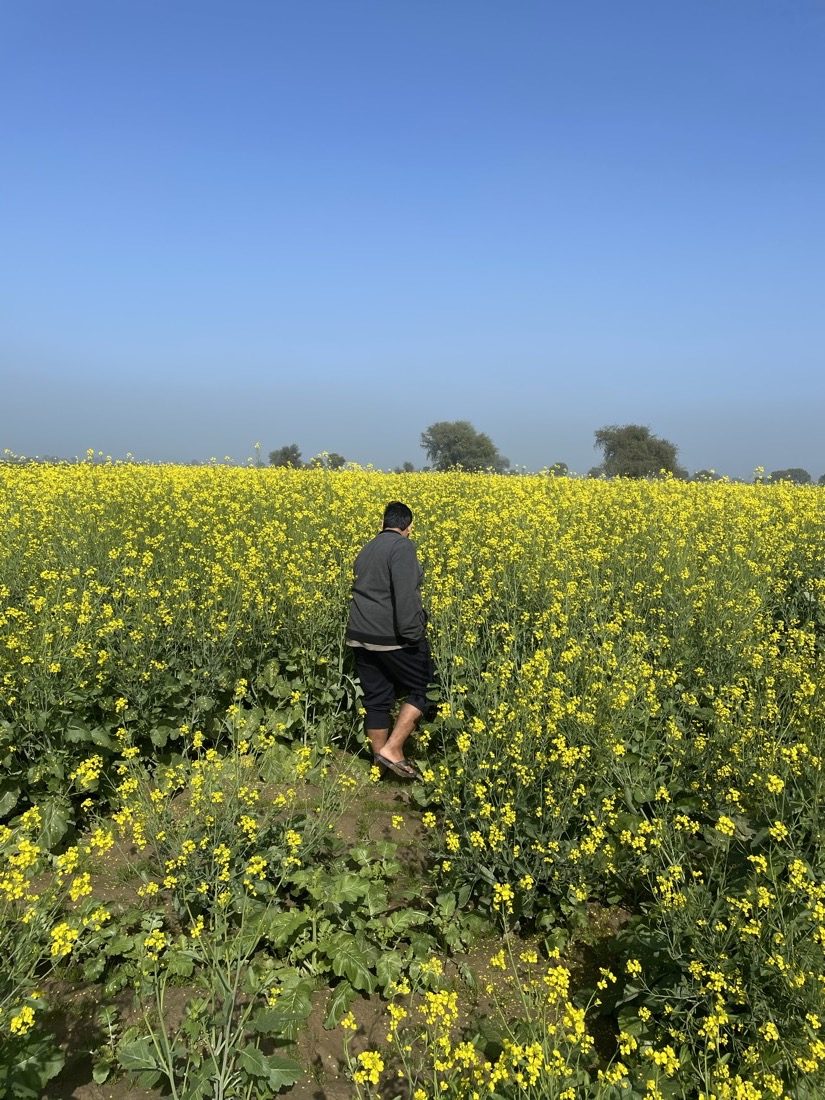
This Year, On These Fields
इस साल की फसल।This year's harvest, on Ajay Kanwar's fields.
Alongside the regular wheat and mustard, our father Ajay grew an unusual purple-black variety this season. Sown October 2025, harvested April 2026, packed at the farm. Pre-paid only this year. If you would like to taste what is growing on the same soil our grandfather grew up on, here is how.
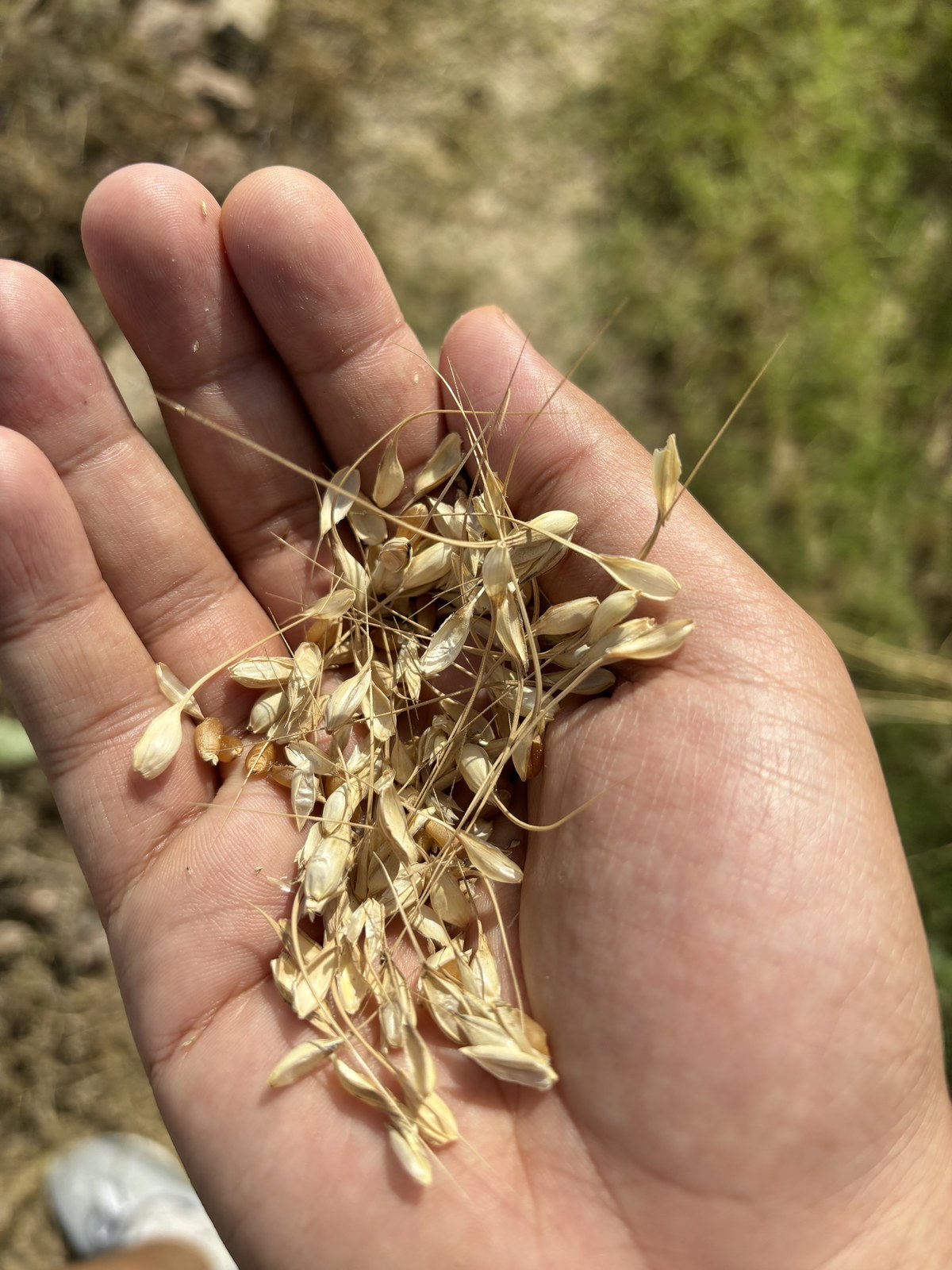
Pack sizes & prices
- Free shipping in Delhi NCR above ₹999
- Flat ₹120 (5 kg) / ₹200 (10 kg) elsewhere in India
- Pre-paid via UPI or Razorpay only this season
- Ships within 3 working days of order
Razorpay Payment Page links will replace this section once activated. UPI VPA: pay@hajarifarms (placeholder).
What we're growing
An anthocyanin-rich wheat, bred, not engineered.
Our black wheat is a pigmented variety developed through traditional plant breeding by Dr. Monika Garg and her team at the National Agri-Food Biotechnology Institute (NABI), Mohali. It is not genetically modified, it is a cross of conventional Indian wheat (PBW621) with a Japanese landrace (EC866732), selected over years for higher anthocyanin content.
The pigment is the same family of natural antioxidants found in jamun, blueberries, and red cabbage. The taste is earthy and a little nutty, different from regular wheat, in a good way.
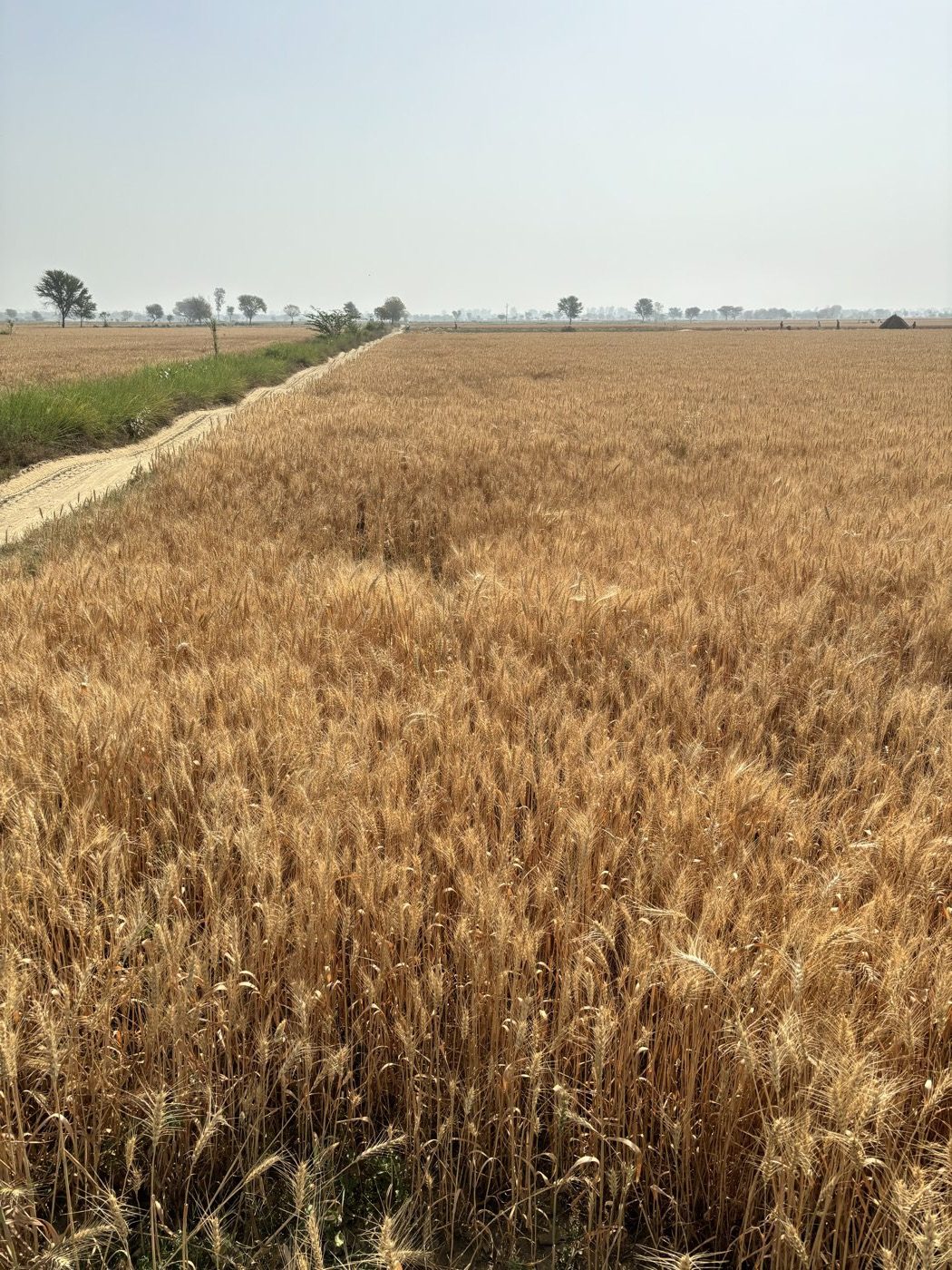
The Science
What's actually been measured.
We don't want you to take our word for it. Here is what peer-reviewed research has established about NABI's coloured wheat lines.
| Variety | Total Anthocyanin (ppm) | Relative antioxidant activity |
|---|---|---|
| Standard amber / white wheat | ~5–15 | baseline |
| Purple wheat (NABI MG-10) | ~25–60 | moderate |
| Blue wheat (NABI MG-9) | ~40–90 | high |
| Black wheat (NABI MG-11) | ~40–140 | highest |
Sources: Garg et al., Journal of Cereal Science 71:138–144 (2016); Sharma, Chunduri, Kumar, Garg et al., PLOS ONE 13:e0194367 (2018), "Anthocyanin bio-fortified colored wheat: Nutritional and functional characterization", NABI Mohali.
Higher antioxidants
Roughly an order of magnitude more anthocyanin than standard wheat, per Garg et al.
More protein & fibre
Reports indicate higher dietary fibre, calcium, iron, zinc, vitamin K, and total phenolic content than standard amber wheat.
20% lower yield
Because the Agropyron chromosome substitution reduces grain set. That's why this is sold at a premium, there is simply less of it per acre.
What we say, plainly.
Black wheat is rich in anthocyanins, naturally-occurring antioxidants that support overall wellness as part of a balanced diet. The fibre is good for digestion. The taste is earthy and nutty.
For chapatis, we recommend starting at a 50:50 mix with regular atta until you get used to the deeper colour, then dial up the proportion as you like it. Works beautifully in parathas, dalia, and rustic breads.
How we grow it.
- Open-pollinated seed sourced from a NABI-licensee multiplier
- Sown October 2025, harvested April 2026
- Alluvial Yamuna–plain soil; same field rotation our family has used for three generations
- Threshed, cleaned, and packed in food-grade poly liner inside kraft
- Whole grain only this season, we do not grind atta on-premises
- Best Before 6 months from packing; store cool and dry
Ready to order?
WhatsApp is the fastest way.
Send us a message with your pincode and pack size. We will reply with a UPI link and a tracking number once your order ships.