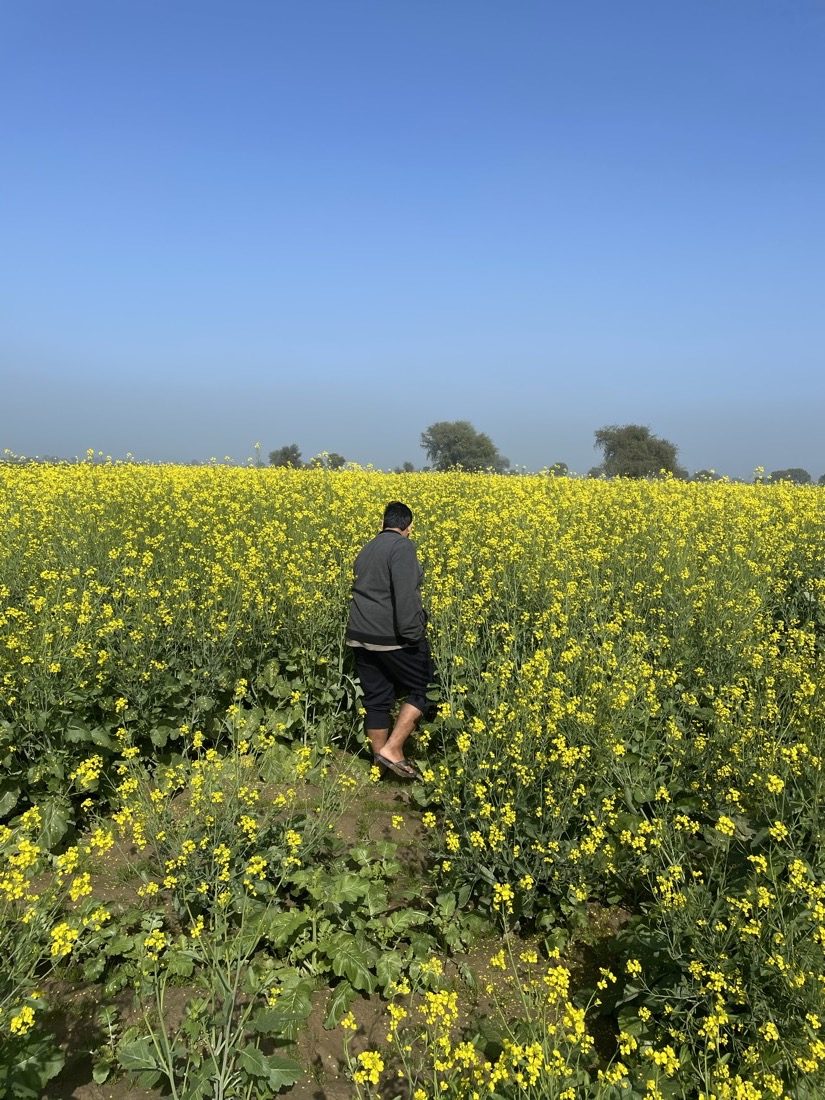
The Farm · Hudithal
हमारी मिट्टी।The field that holds it all together.
This is where our grandfather Hajari Singh played as a boy. Where, decades later, he kept his family's hold on the soil through a long career in state engineering. Where our father Ajay now walks every morning before the sun is hot. The land sits in Hudithal, a revenue village in Hathin Tehsil, Palwal district, Haryana, pincode 121103, about 80 km south of Delhi.
Soil & seasons.
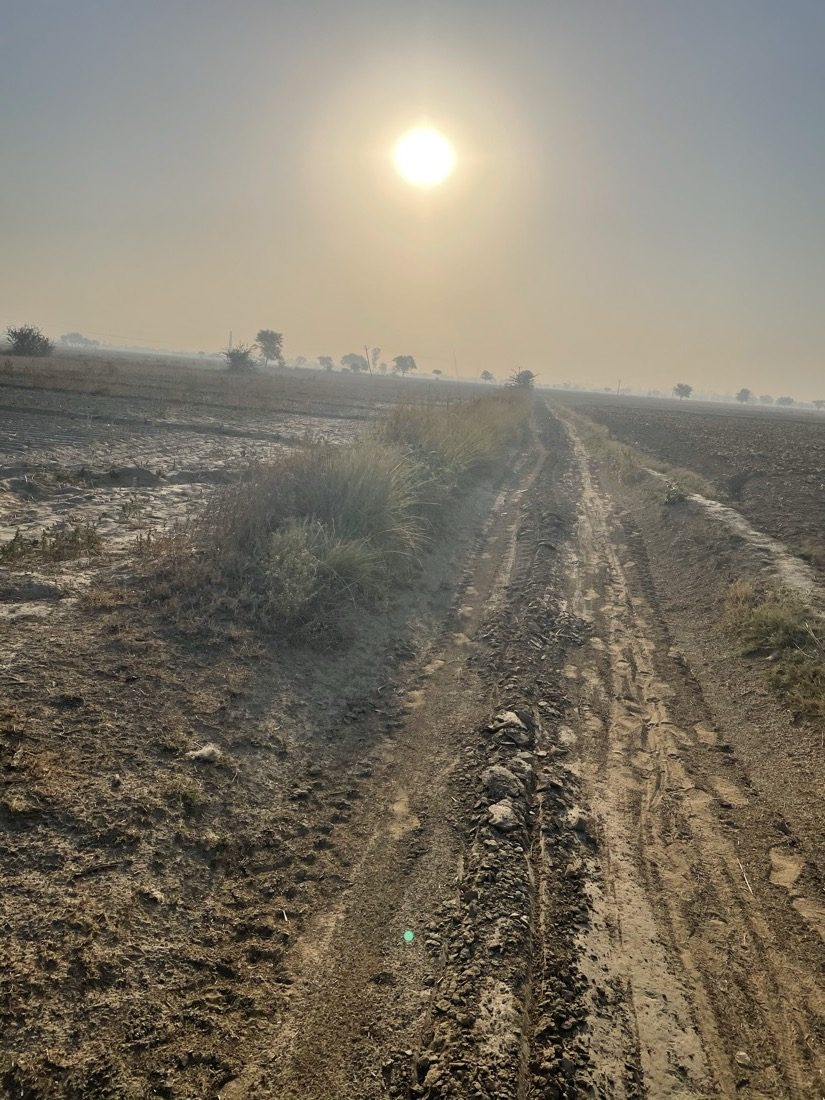
The Indo-Gangetic plain here is alluvial loam, deposited over millennia by the Yamuna. Elevation is around 195 metres. Summers are hot and dry; winters are cool, with January night temperatures often near freezing, exactly the conditions in which wheat sets a full grain head.
Our cropping cycle follows the standard Haryana pattern:
- Rabi (Oct–Apr): wheat and mustard
- Kharif (Jun–Oct): paddy, bajra, sometimes cotton
- Black wheat (NABI MG-11) joined our rabi rotation this year, sown October 2025 alongside our regular wheat
From the fields
Across the seasons.
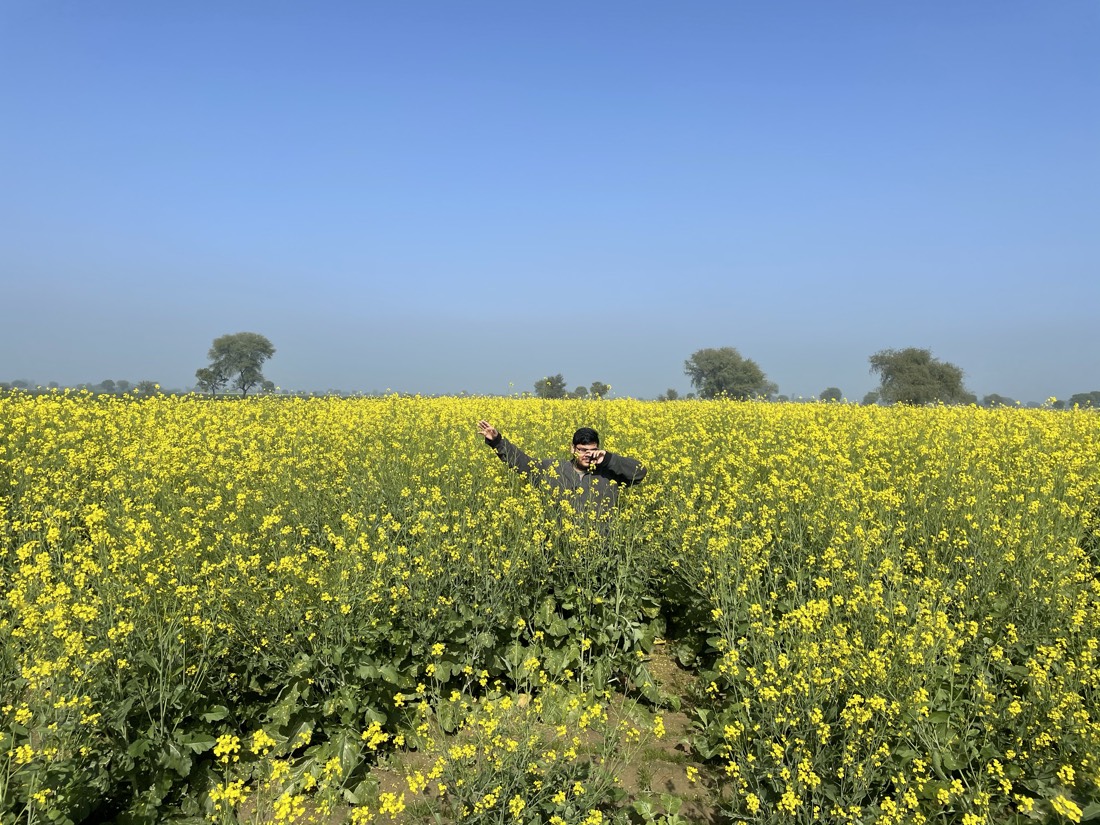
Mustard, February
Yellow mustard in full bloom across the rabi season. The whole family walks these fields when the bloom is on.
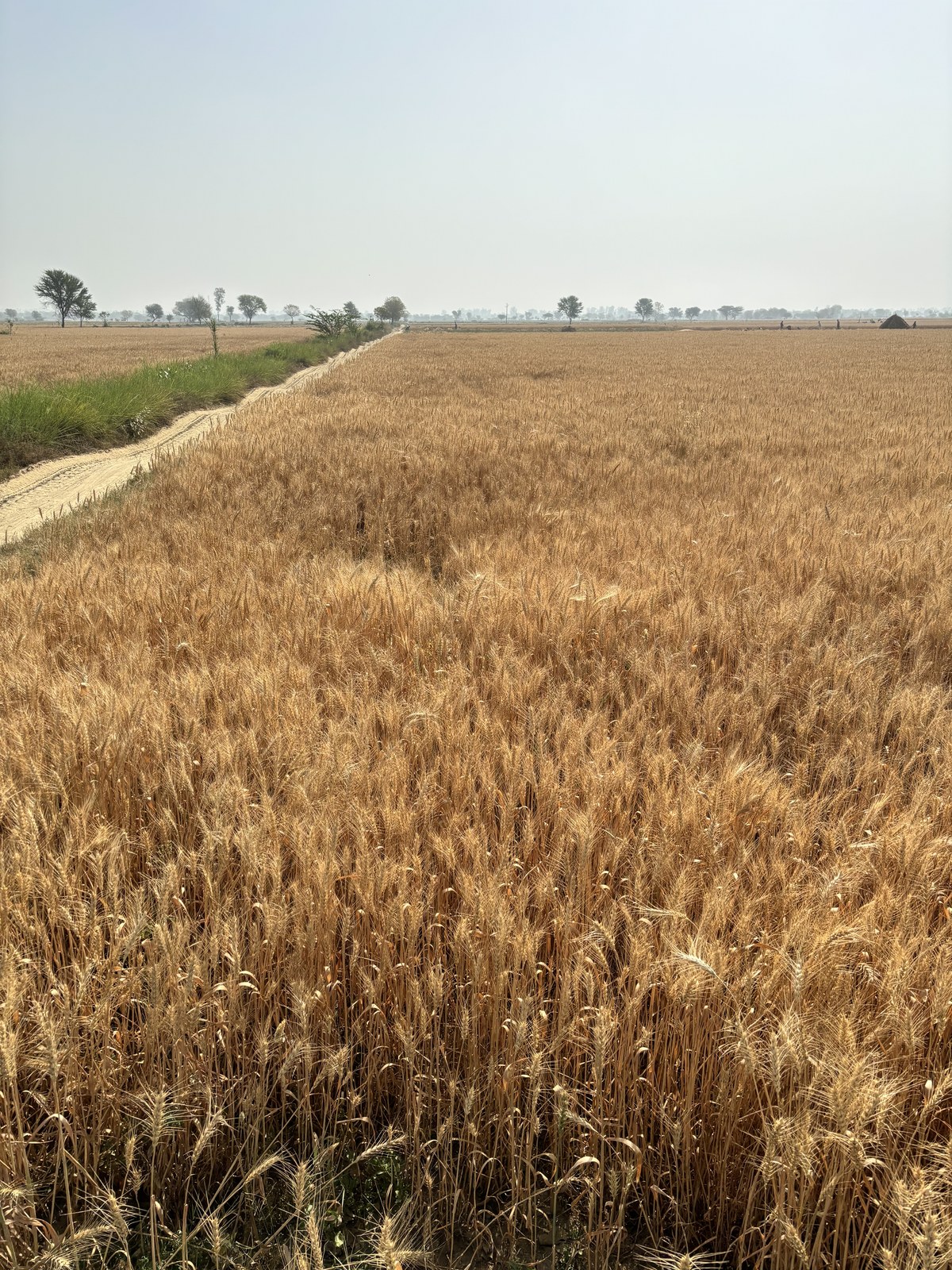
Wheat, April
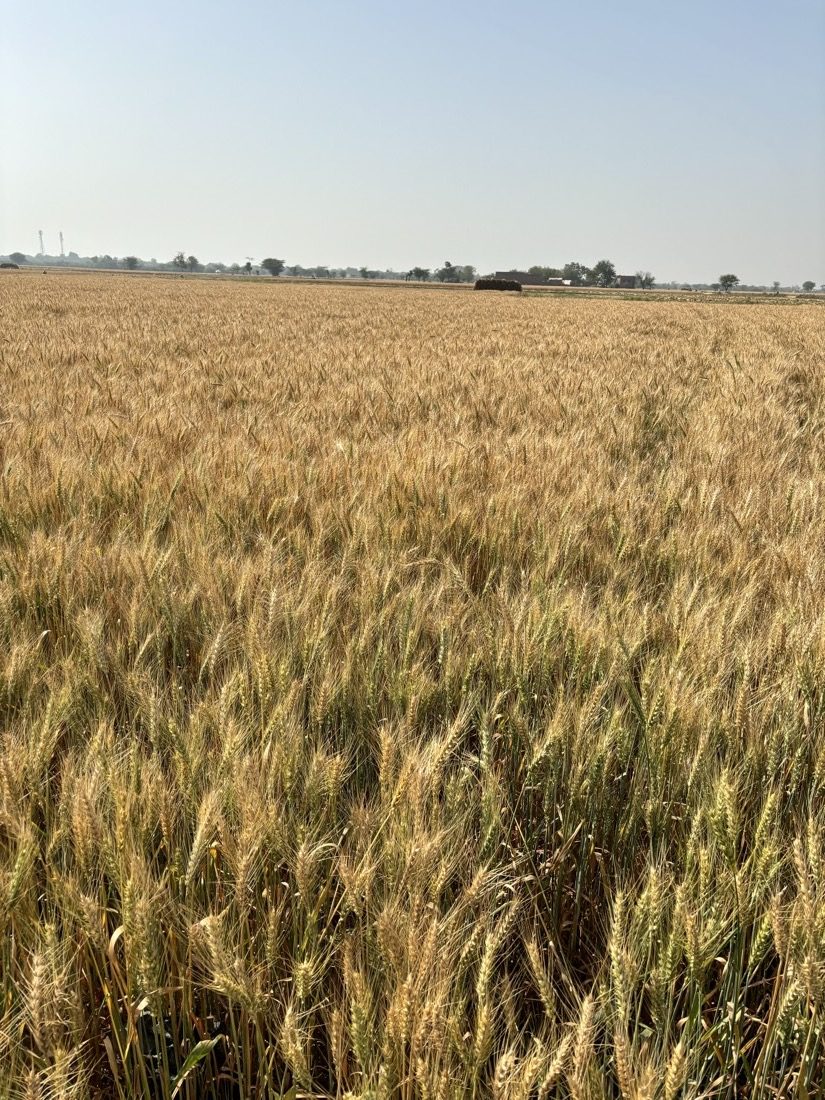
By late April, the grain heads turn golden and heavy. Harvest is timed to the cool hours of the morning.
Field-edge plantings
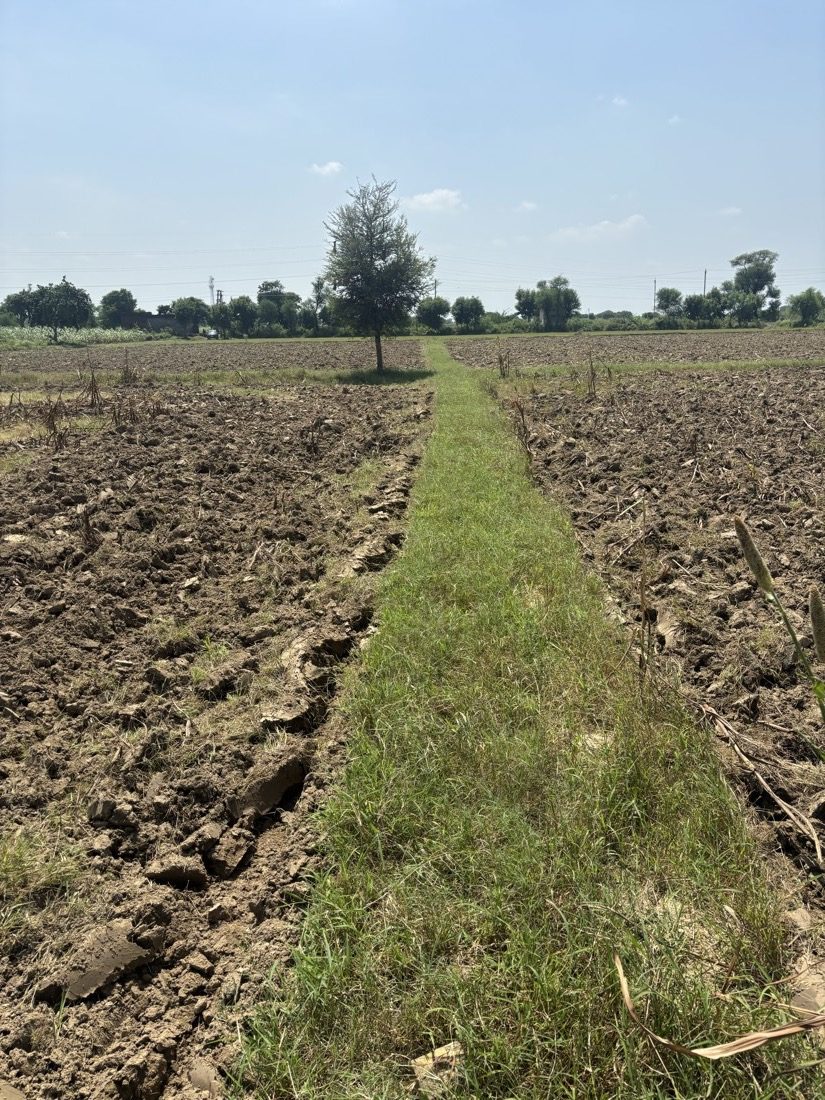
New trees go in along the bunds each season, shade and windbreak for the decades to come.
Vegetables & fodder
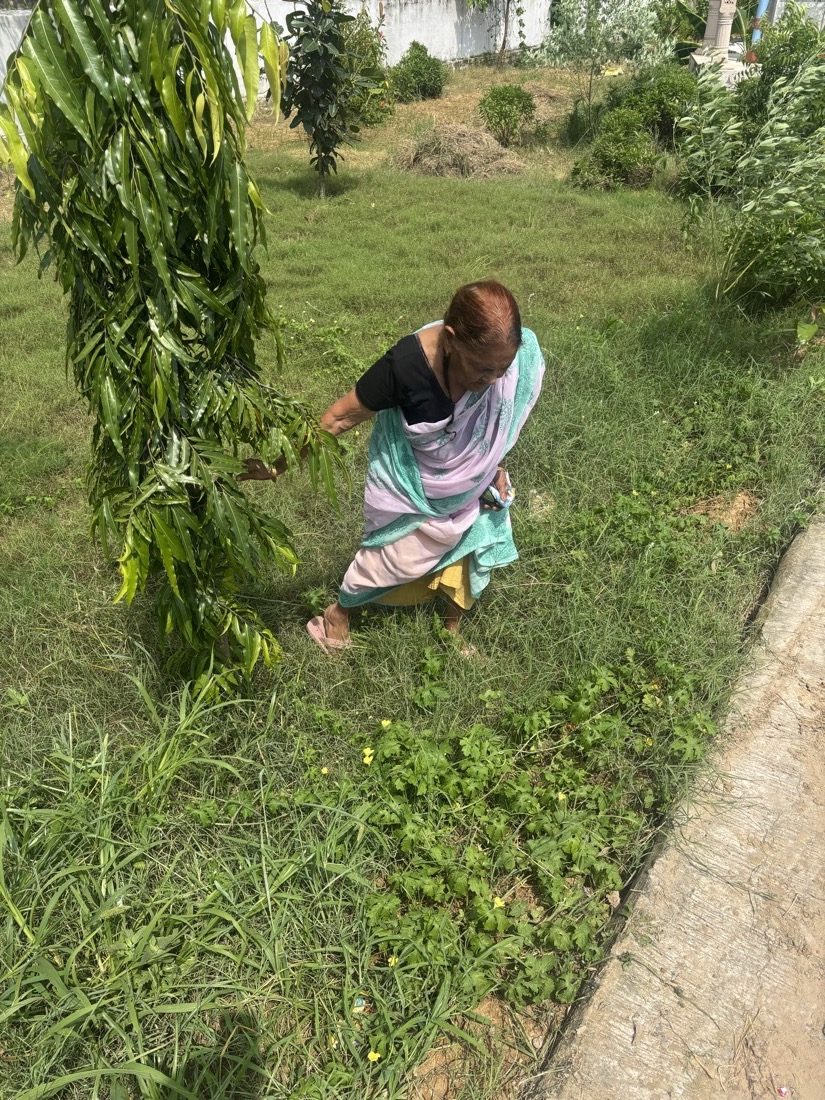
Alongside the grain crops, smaller patches of vegetables and seasonal fodder for the cattle.
The village cattle
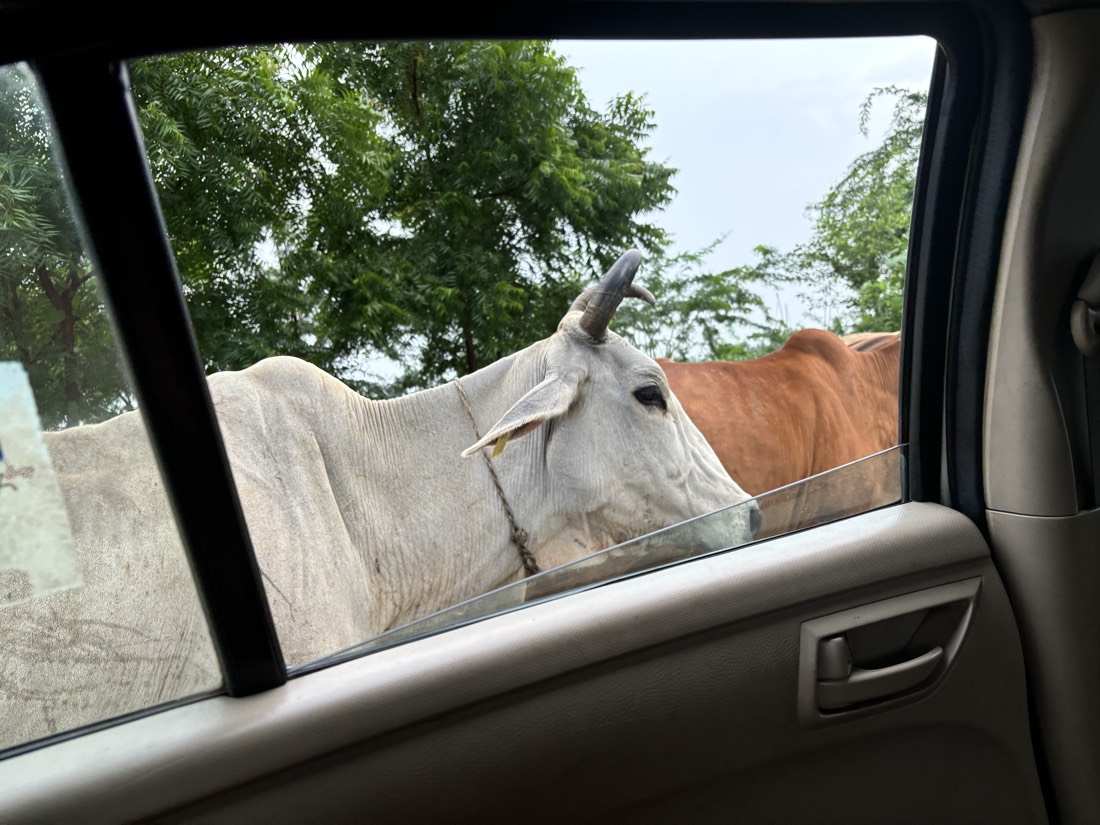
Cattle are part of every Hudithal compound. The dung returns to the field as fertiliser; nothing is wasted.
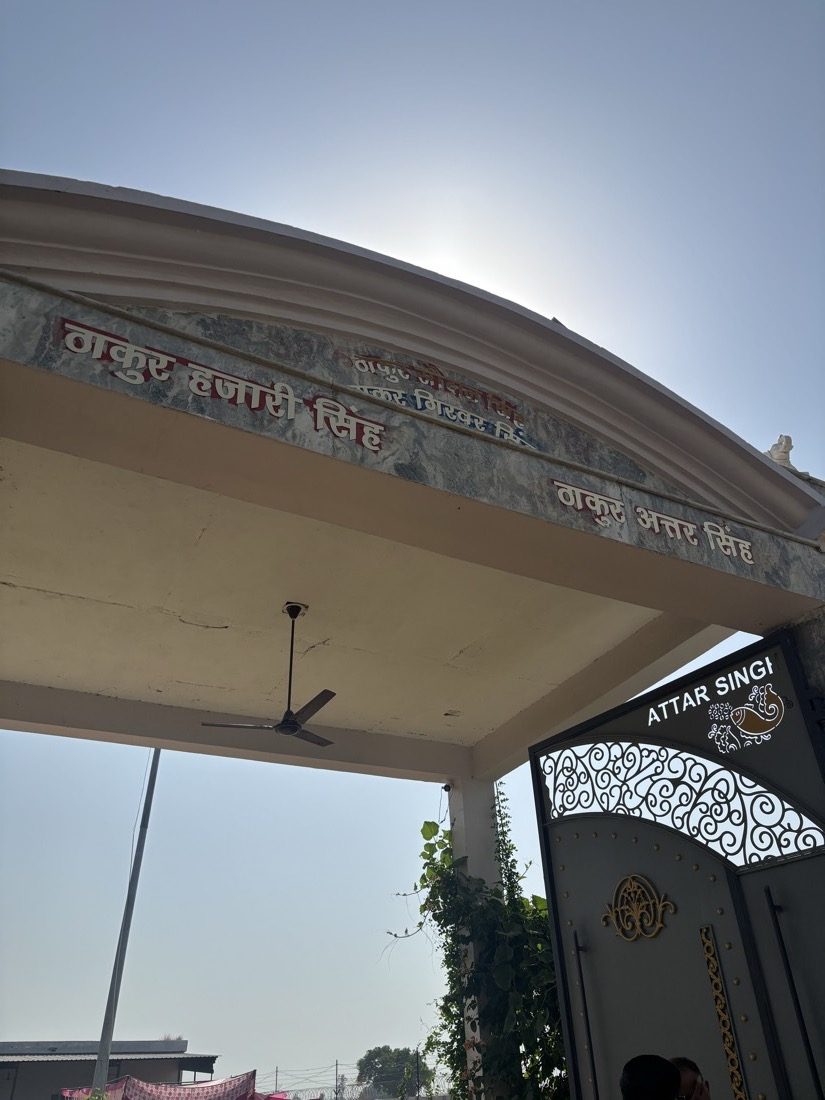
The family memorial
The Hajari Singh Kanwar memorial stands at the family compound, visible from the road as you enter the village.
The region
At the Braj-Mewat border.
Palwal sits where the Braj cultural belt (across the Yamuna, Krishna country) meets Mewat (the Mewati-speaking tract). Hathin tehsil specifically is in the Mewati zone. Local language: Hindi dominates, with Mewati spoken in this tehsil and Braj influence drifting in from the east.
Mythologically, Palwal is identified with Apelava, part of the Pandava kingdom from the Mahabharata. The Kaserua Khera mound in Manpur village, 20 km south, has Painted Grey Ware layers ~3,000 years old. Mahatma Gandhi's first arrest under the Rowlatt Act was at Palwal Railway Station in 1919.
None of that is on the wheat label. But the soil knows.